



Dissertation Help UK: How to Choose a Topic, Write a Proposal and Structure Each Chapter
Nobody warns you how big a dissertation feels until you're sat in front of a blank document. You were buzzing about researching your own idea, and then reality kicks in: thousands of words, months of reading, one deadline. So where do you begin? How do you land on a topic that won't make you miserable by week three? And what are you supposed to put in each chapter anyway? If you're asking these questions, you're in good company. Pretty much every undergraduate and postgraduate student does. It gets easier once you can see how the whole process fits together, and you'll tackle each stage with much less panic.
How to Choose the Right Dissertation Topic
Your topic matters more than you'd think. You'll be living with it for weeks, possibly months, so pick something you can stand to read about at 9 pm on a Tuesday.
Look back at your course for ideas. Was there a lecture that stuck with you? A case study you kept thinking about afterwards? Start there.
Then get specific. "The Impact of Social Media on Businesses" is way too wide. You'd never cover it properly. Something like How Instagram Marketing Influences Buying Decisions Among UK University Students is much easier to get your teeth into, because you know exactly what you're looking at and who you're looking at it with.
Before you lock anything in, run through these:
Is there actually enough published research on it?
Can you finish it within your deadline and word limit?
Will your university accept it?
And talk to your supervisor first. Honestly, a ten-minute conversation now can spare you weeks of backtracking.
How to Write a Dissertation Proposal
A proposal says what you're going to research, why anyone should care and how you'll go about it. Try not to treat it as yet another assignment. It's a roadmap, and you're allowed to adjust it as you go.
Most proposals cover the following.
Research Background and Problem
Introduce your subject and describe the problem your research is trying to deal with. You need to convince the reader it's worth investigating.
Research Aim and Objectives
The aim is the big thing you want to achieve. The objectives are the smaller jobs that get you there, so break it down until each one feels doable.
Literature Overview
Keep this short. Summarise what's already been written, flag the main findings, note where researchers don't agree and point to anything nobody has really looked at yet.
Research Methodology
Tell them how you'll collect your information. Interviews, questionnaires, existing datasets, published literature- whichever it is, explain why it's the best fit for your question.
Research Timeline
Plan out your research, data collection, writing and editing. Give yourself more time than you think you need, because everything takes longer than you expect.
Finally, check your university's guidelines. They change from course to course, and it's an annoying way to lose marks.
Need Help with Your Dissertation?
ConnectHow to Structure Each Dissertation Chapter
Once the proposal's approved, you need to sort everything into chapters. Different universities and subjects do it differently, but this is the setup you'll come across most.
Chapter 1: Introduction
Introduce the topic, give some background and explain why it matters.
Lay out your research problem, aims, objectives and questions. Add a brief word on your methodology, then walk the reader through how the rest of the dissertation is organised.
Chapter 2: Literature Review
This chapter is about what other researchers have already found on your topic.
Resist the urge to just list articles one by one. Set the arguments against each other, question the evidence and show where the gaps are. Basically, show you're thinking about it, not just reporting it.
Chapter 3: Research Methodology
Explain how you did your research. What was your design? How did you collect the data, who took part, and how did you analyse it? Cover any ethical issues too, and say why your methods made sense.
Chapter 4: Results and Findings
Show what you found. Survey responses, interview themes, statistics, tables, graphs, whatever suits your subject. Present it clearly and don't say the same thing twice.
Chapter 5: Discussion
Now you interpret it all. What do your results mean? How do they compare with earlier studies? Did you answer your research questions? The best discussions link the evidence to proper, well-reasoned analysis.
Chapter 6: Conclusion and Recommendations
Wrap it up. Sum up the main findings and answer your research question directly.
Be honest about the limitations and suggest where future research could go. Don't sneak in new evidence at the last minute.
After that, check your references, appendices and formatting against what your university asks for.
Common Dissertation Mistakes to Avoid
Lots of students with good ideas still lose marks over things they could have avoided.
Going too broad with your topic is a classic. Starting research before you've got a clear question is another, and so is saving the writing for the last few weeks. All of them leave you stressed for no good reason.
Weak referencing is common, and so is writing that describes everything and analyses nothing.
What helps? Small weekly targets, tidy research notes and enough time at the end to proofread properly.
Need Help with Your Dissertation?
ConnectConclusion: Make Your Dissertation Journey More Manageable
A dissertation doesn't need to feel impossible. Choose a focused topic, write a proposal you're happy with and know what each chapter is for, and it starts to feel manageable.
If you're stuck on planning, structure or referencing, getting some professional guidance can help you move forward with a bit more confidence.
Need dissertation help in the UK? Visit Ask Me Assignment to explore academic support for dissertation planning, research guidance, chapter organisation and proofreading. It might be just what you need to get your dissertation finished with a lot more clarity.
Latest Resources & Blogs
Expert tips and guides to help you succeed.
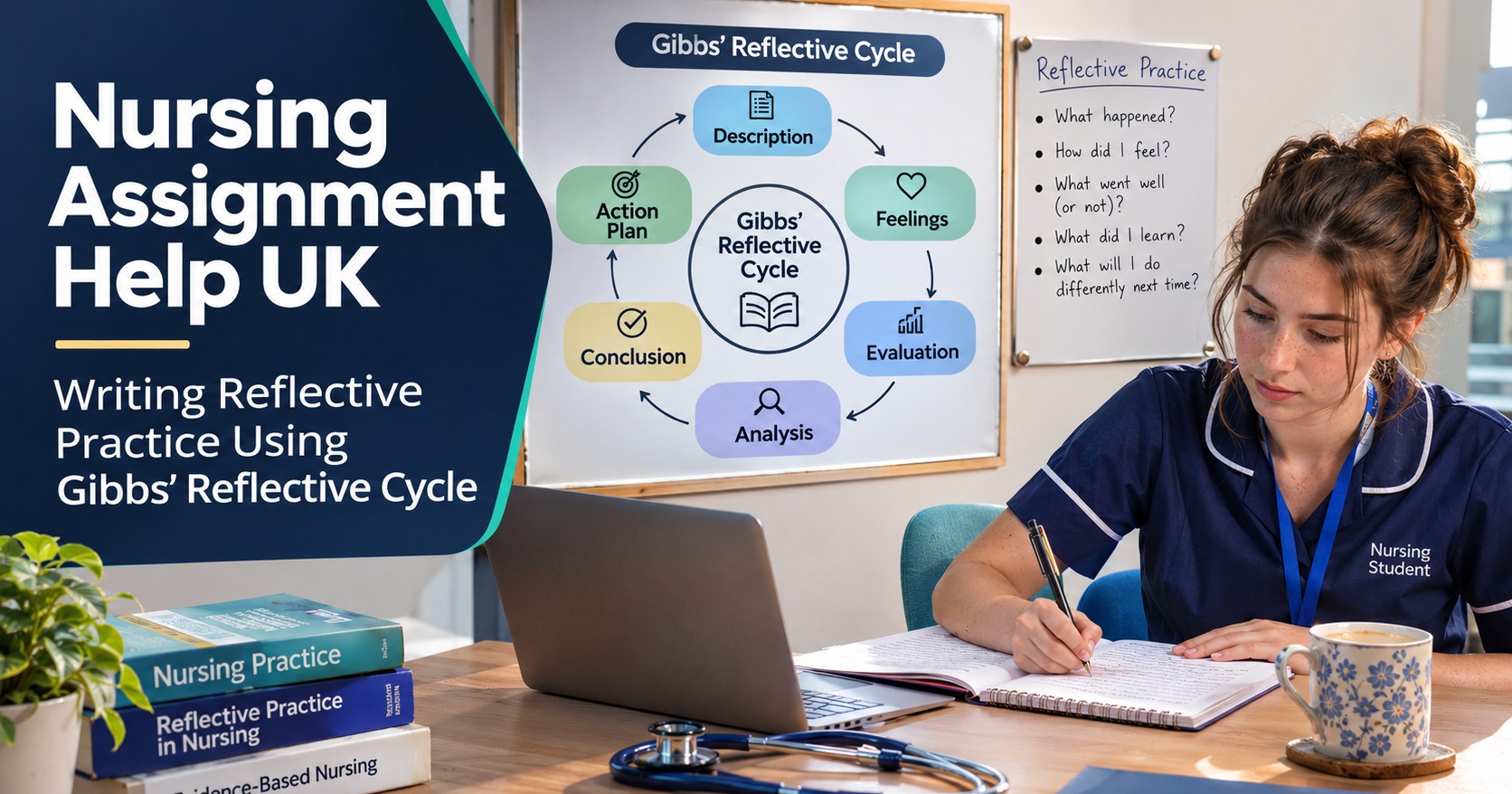
Nursing Assignment Help UK: Writing Reflective Practice Using Gibbs' Reflective Cycle
Nursing isn't only about learning procedures. A big part of it is admitting when you've got something wrong, dealing with how a shift made you feel, and slowly becoming more confident each time you're on the ward. That's why UK universities ask nursing students to write reflectively. The trouble is, turning something that happened on placement into a proper assignment is harder than it sounds. Nursing isn't only about learning procedures. A big part of it is admitting when you've got something wrong, dealing with how a shift made you feel, and slowly becoming more confident each time you're on the ward. That's why UK universities ask nursing students to write reflectively. The trouble is, turning something that happened on placement into a proper assignment is harder than it sounds. Plenty of students can remember every detail of what happened, yet get stuck on what they actually learned. Gibbs' Reflective Cycle helps with exactly that. Use it well, and if you need nursing assignment help UK, your reflections will tie your placement experience to what you've studied.

Strategic Management Assignment Help: Applying SWOT, PESTLE and Porter's Five Forces Beyond Basic Th
You've put in the hours on SWOT, PESTLE and Porter's Five Forces. You know what they are, and your assignment looks tidy. Then the marks come back with a comment you were hoping not to see: "Too descriptive. Needs more critical analysis." Annoying, right? It's also one of the most common bits of feedback business students get. Knowing the theory counts for something, but your lecturers want to see you use it to explain why a business makes the decisions it does. The fix isn't more reading. It's a change in how you use what you've already read. Once that clicks, these assignments get a lot easier to handle.
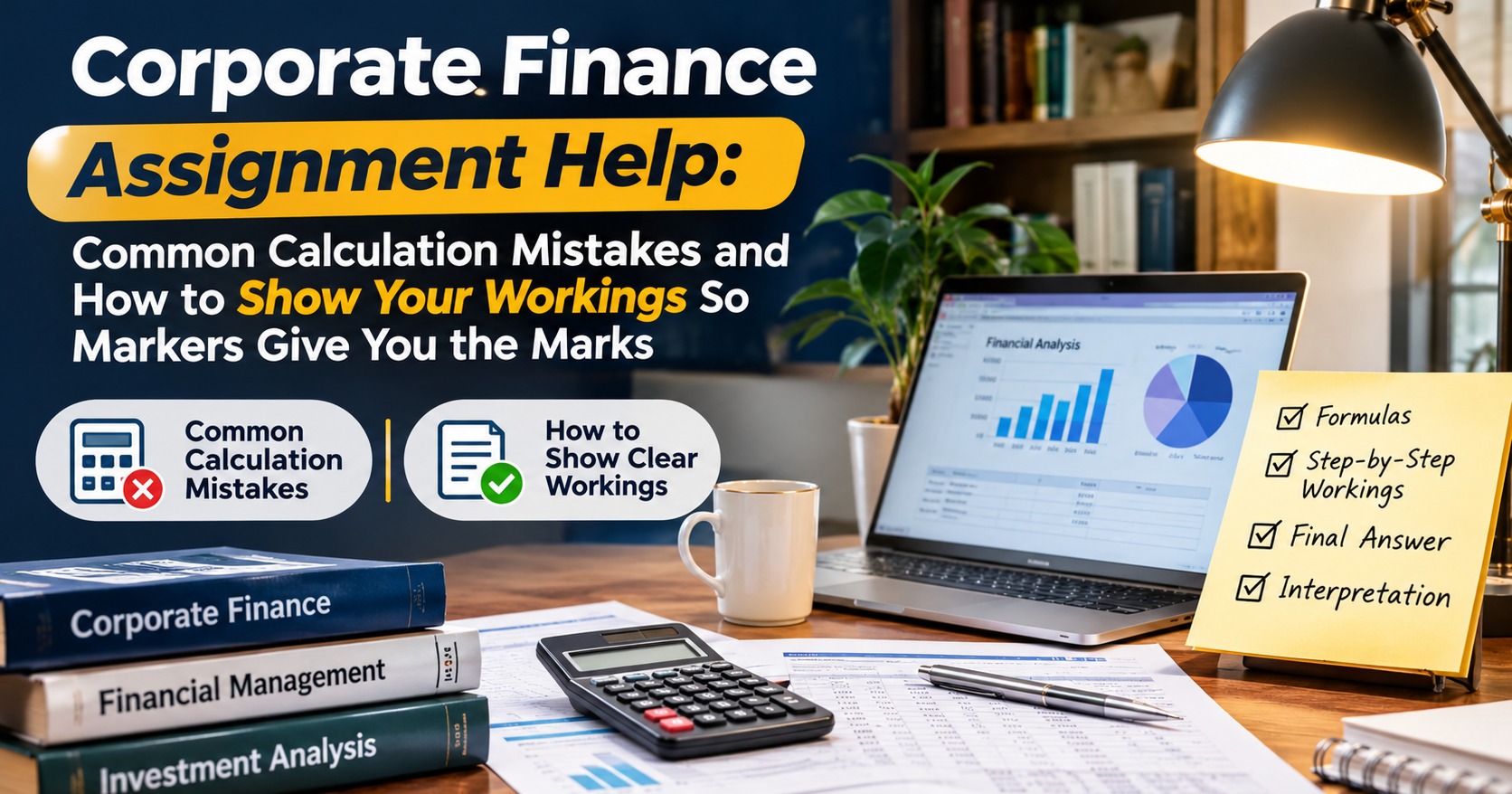
Corporate Finance Assignment Help: Common Calculation Mistakes and How to Show Your Workings So Mark
Most people don't lose marks in corporate finance because they can't do the maths. It's usually something smaller. A discount rate typed in wrong, a cash flow in the wrong year, a final answer with no explanation next to it. You can know the theory inside out and still drop a grade over stuff like that. If you're studying at a UK uni, there's another layer too. Your marker doesn't only want the right number. They want to see how you got it and what it means for the business. Here's where things tend to go wrong, and how to lay out your work so the marks are easy to give.